Build what endures
Diagnose the business. Develop the leaders inside it.
Build what endures

Effort isn't the problem. Architecture is.

Companies don't stall from lack of effort. They stall because the architecture was built for the last revenue tier, and now you're trying to push the next one through it. We run two diagnostics. One on the organization. One on the leaders inside it. The structure you build after that actually holds.

Take the LDNA · 6 minutes → Explore BAIC
✓  Free 2-page LDNA report ✓  ~6 minutes ✓  No sales call required
Two proprietary instruments

One architecture, two lenses.

We diagnose how the organization is built, and how the leaders inside it actually operate. The same evidence base runs end to end.

Organizational architecture

BAIC

Business Architecture & Intelligence Cycle

A 30-day diagnostic of the business as a system, across eight interdependent domains. Surfaces failure modes before they cascade, ranks them by impact, and installs a 90-day execution blueprint with a hosted dashboard. For operators scaling: founders, CEOs, or acquirers stress-testing before close.

  • Architecture maturity score across 8 domains
  • Vulnerability register: what breaks first, what breaks hardest
  • Operating blueprint with owner-level accountability
  • Also used by acquirers for pre-close diligence
Inside a typical report

Reports robust enough for understanding. Clear enough for execution.

Click any peeking page (or any tab below) to flip through. Representative example, fictional team.

Value-stream field map, team positions

Page, Field map
Vision strategy Flow operations Delivery execution Structured Adaptive Strategist Venturer Expert Designer Analyst Adventurer Pathfinder Artisan Ambassador Organizer Promoter Conserver Catalyst Challenger Mediator AC MR KP SD JL

Seven dimensions, natural vs adapted

Page, 7 dimensions
AC
Alex Chen, CEO, Aurelius HoldingsNatural Adventurer → role asking for Designer, adaptation load 71

AI-exposure read, where value holds

Page, AI exposure
AI-Oversight Readiness
9/ 10
Your Durable Edge
7/ 10
8
Relational & Influence
8
Directional Judgment
7
Communicative Craft
6
Creative Origination
5
Operational Execution
8
Analytical Processing

Team interaction grid, who multiplies with whom

Page, Team grid
ACMRKPSDJL
ACACDesignerHighSharedHighHigh
MRMRPathfinderHighSharedHigh
KPKPStrategistOverlapHigh
SDSDAdventurerHigh
JLJLCatalyst
High complementarity Shared, sequence Overlap, separate

Representative exampleFictional Aurelius Holdings leadership team. Your read will differ.

Licensed Delivery Partner

Proven at executive scale.

In executive coaching and leadership-team development, the LDNA is delivered through licensed partners. Vertical Motion is our delivery partner, and the public proof that the methodology is deployed inside real leadership teams, executive teams, and CHRO engagements.

"We help good people become great leaders."

Vertical Motion is a leadership development practice founded by Tom Cox, a former Aerospace and Defense executive. Their work centers on the layer where executive performance is actually made and unmade: leadership teams, executive teams, CHROs, and the senior leaders inside high-stakes companies. They also run a substantial one-on-one executive coaching practice, with a growing public following on YouTube and across the leadership-development space. Tom carries the practitioner side of that work, and is increasingly the public voice for how validated psychometric instruments are read and applied inside executive coaching.

The LDNA sits inside Vertical Motion's Whole Executive Framework™ as one component of a broader battery of validated psychometric evaluations, used in coaching engagements, leadership-team interventions, and CHRO partnerships. Across hundreds of leaders and teams, that combination of assessment, framework, and executive coaching is the working evidence that the methodology holds at scale.

Leadership Teams Executive Teams CHRO Engagements Executive Coaching Whole Executive Framework™
Where Vertical Motion's coaching team has led
Disney
NFL
NCAA
Accenture
Uniqlo
Skechers
L.L.Bean
U.S. Air Force
Nationwide
Empower
Great American Insurance
Why companies stall

Growth doesn't forgive structural debt. It amplifies it.

At $300K-$1M/month, the architecture that got you here starts breaking. The same four patterns keep showing up.

The founder is the bottleneck

Every decision routes through one person. The day they're out, nothing moves.

Visibility breaks down

You find out things broke after they broke. Dashboards lie, or don't exist, or by the time you read them they're a board update.

Leadership outgrows structure

You've outgrown the org chart. Decision rights and reporting lines still belong to the previous stage of the company.

The team is mis-paired

Right people in the wrong seats. Or worse, paired with someone who shares their blind spot instead of covering it.

How we work

Diagnose first. Prescribe second. Govern continuously.

Every engagement starts with evidence, not opinion. The diagnostic tells us what to build first, what to defer, and what to ignore entirely. Most consulting starts at step three.

01

Fit assessment

Eight questions. If there's no structural leverage to find, we say so on the first call.

02

Diagnose

BAIC reads the organization. LDNA reads the leaders. Stack them and the real failure points stop hiding.

03

Prescribe

A sequenced 90-day plan. What to fix this month, what pairs with what, where coaching pays for itself.

04

Govern

Quarterly re-score. Hosted dashboard. The architecture you built stays the architecture you have.

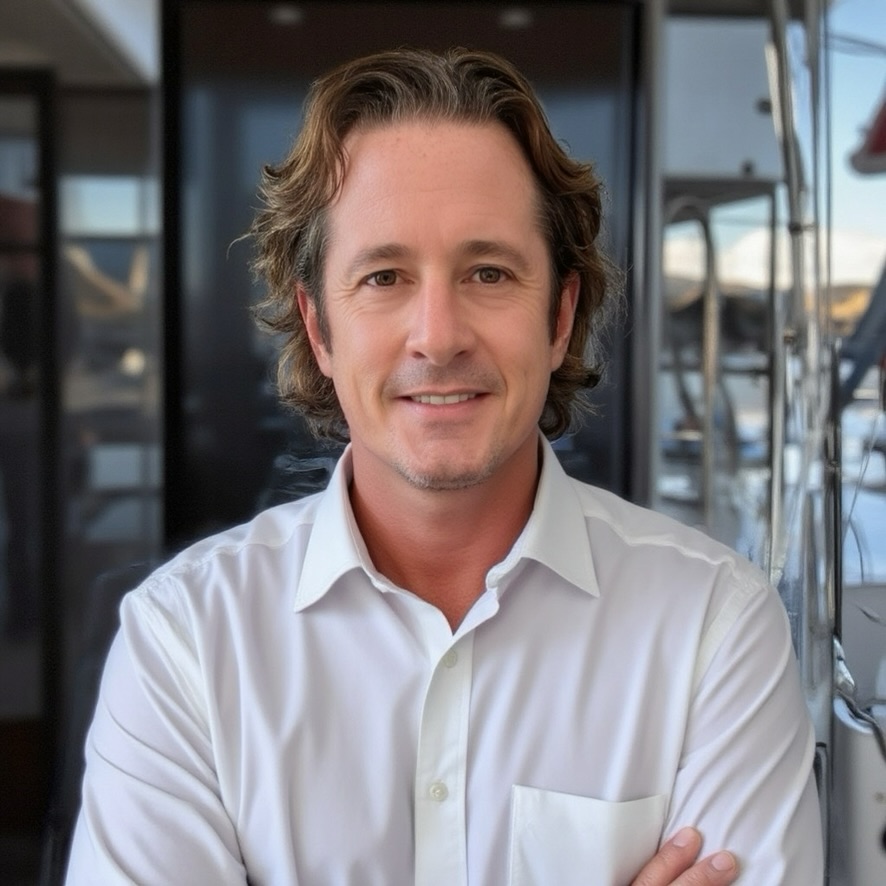
Ryan Roberts, founder of The Saunter Group
"I think of businesses as systems. Like all systems, they follow patterns when they fail, and the patterns are foreseeable. The right failure analysis maps how visible each cascade is from inside, then ranks the vulnerabilities that actually matter." Ryan "Gus" Roberts · Founder · The Saunter Group
Behind the method

Built by an operator who learned systems the hard way.

Two decades flying for the Air Force, then leading teams that modeled systems risk for the Department of Defense alongside the largest defense primes. The job was figuring out which weak link in a complex system would cascade into the next one, and how to engineer it out before it did.

After the service, built and sold a defense contracting firm while living on a sailboat in the Caribbean. Different arena. Same engineering discipline applied to a P&L.

Both BAIC and LDNA came out of that work. The conviction underneath: growth without architecture isn't freedom. It's exposure.

Read the full story →
Two ways to start

Choose the one that fits where you are.

Most people start with the LDNA. It's free, takes about six minutes, and tells you something useful about how you actually lead. If you're already considering BAIC for the whole company, run the Fit Assessment instead.

Front door · Free

Take the LDNA Assessment

A leadership-intelligence read for you or your team. Free 2-page report on completion. ~6 minutes. No sales call.

Take the LDNA →
For BAIC engagements

Run a Fit Assessment

Eight questions. We confirm whether BAIC is the right next move for your company, or tell you it isn't.

Run the Fit Assessment → Or book a 30-min diagnostic call →

Still in research mode? Read the full method →